The Complete M&E Guide to Effective Remote Monitoring
February 3, 2026 2026-02-06 5:35The Complete M&E Guide to Effective Remote Monitoring

Remote monitoring has evolved from an emergency workaround to an essential capability. Navigating Time Constraints, Accessibility Challenges, and Security Risks While Maintaining Data Quality
The security assessment arrived at 4 PM on Friday. Armed conflict had intensified in two of the program’s five districts. The evaluation team had planned to spend three weeks conducting face-to-face interviews with beneficiaries, observing program activities, and facilitating focus group discussions. Now, international staff were prohibited from traveling to 40% of program sites. Local enumerators faced heightened risks. Transportation routes were compromised. The field mission that had taken months to plan was impossible to execute as designed.
The team had three choices: Cancel the evaluation entirely and lose critical learning opportunities. Proceed with the original plan and accept unacceptable safety risks. Or adapt to remote monitoring approaches that could generate credible findings without physical presence in all locations. They chose adaptation.
What I learned about remote monitoring fundamentally changed how they approached M&E in fragile contexts.
Remote monitoring has evolved from an emergency workaround to an essential capability. Research by the Secure Access in Volatile Environments (SAVE) program found that organizations increasingly rely on remote monitoring in insecure contexts, with third-party monitoring filling critical evidence-gathering gaps in areas where direct access is restricted due to insecurity. Yet many M&E practitioners approach remote monitoring reactively, scrambling to adapt when field access becomes impossible rather than building remote capabilities proactively.
Effective remote monitoring is not simply traditional monitoring with video calls substituting for field visits. It requires fundamentally rethinking how evidence is gathered, validated, and used when physical presence is constrained by time, accessibility, or security concerns. This article examines when remote monitoring is appropriate, how to adapt monitoring strategies effectively, which remote methods work for different purposes, and what technologies enable quality remote M&E.
When Remote Monitoring Becomes Necessary: Understanding the Triggers
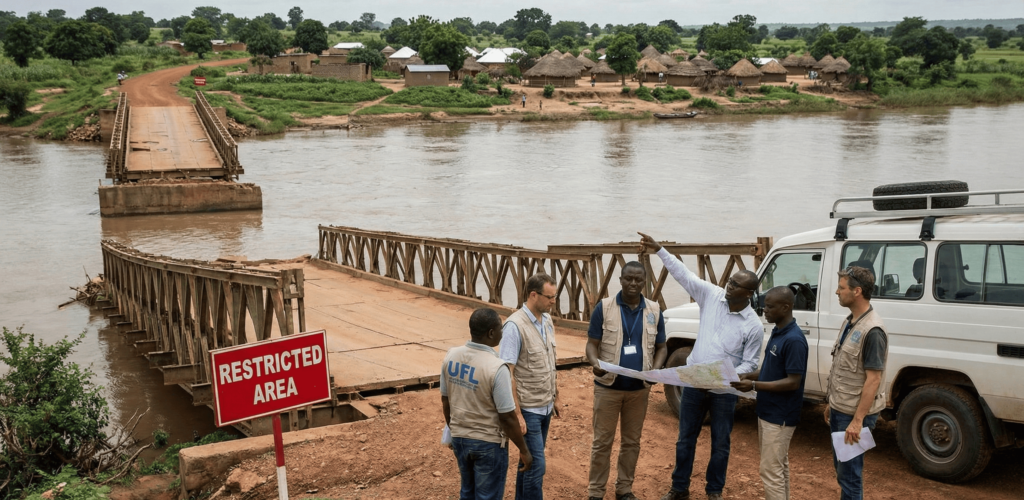
Remote monitoring is typically driven by three primary factors, each creating distinct constraints that shape appropriate approaches.
Time Constraints: When Deadlines Override Ideal Methods
Sometimes monitoring timelines simply do not allow for extended field missions. Rapid assessments requiring data collection within 2-4 weeks cannot accommodate the logistics of multi-site field visits, particularly when sites are geographically dispersed or in remote locations requiring multiple days of travel.
Time constraints manifest in several scenarios:
- Donor reporting deadlines: Quarterly reports due with insufficient time for comprehensive field missions
- Emergency response contexts: Rapid needs assessments requiring immediate information to inform program design
- Adaptive management decisions: Mid-implementation adjustments requiring quick feedback on what is or is not working
- Program extensions: Continuation decisions needed before full evaluation field missions can be organized.
In these situations, remote monitoring enables gathering sufficient evidence within compressed timelines, though with acknowledged limitations compared to in-person data collection.
Accessibility Challenges: When Geography Becomes a Barrier
Physical accessibility challenges render traditional field missions impractical or impossible:
- Remote geographic locations: Communities accessible only by multi-day journeys requiring boats, small aircraft, or arduous overland travel
- Seasonal access restrictions: Areas unreachable during rainy seasons when roads become impassable or rivers flood
- Infrastructure destruction: Conflict or natural disasters damaging transportation networks
- Administrative restrictions: Government-imposed travel limitations, visa delays, or movement restrictions
- Cost prohibitions: Transportation and accommodation costs for accessing remote areas exceeding available budgets
- Disease outbreak: Movement restrictions are brought about by a communicable disease/virus outbreak in a particular area, limiting reach.
Security Risks: When Safety Overrides Data Collection
Security concerns represent the most consequential driver of remote monitoring. Research on monitoring in fragile and conflict-affected settings emphasizes that safety must always take precedence over data collection (Better Evaluation, 2024). No information is worth lives.
Security-driven remote monitoring becomes necessary when:
- Active conflict zones: Ongoing violence makes field presence too dangerous for international or national staff
- Targeted threats: Specific intelligence indicating risks to evaluation teams or stakeholders
- Political instability: Coups, protests, or civil unrest creating unpredictable security environments
- Criminality: High rates of kidnapping, banditry, or armed robbery in program areas
- Health emergencies: Disease outbreaks or pandemics making travel medically inadvisable
In these contexts, remote monitoring enables continuing essential monitoring functions while protecting staff safety. However, it also transfers some risks to local data collectors, an ethical concern requiring careful consideration.
Adapting Monitoring Strategies: From Field-Based to Remote-Enabled
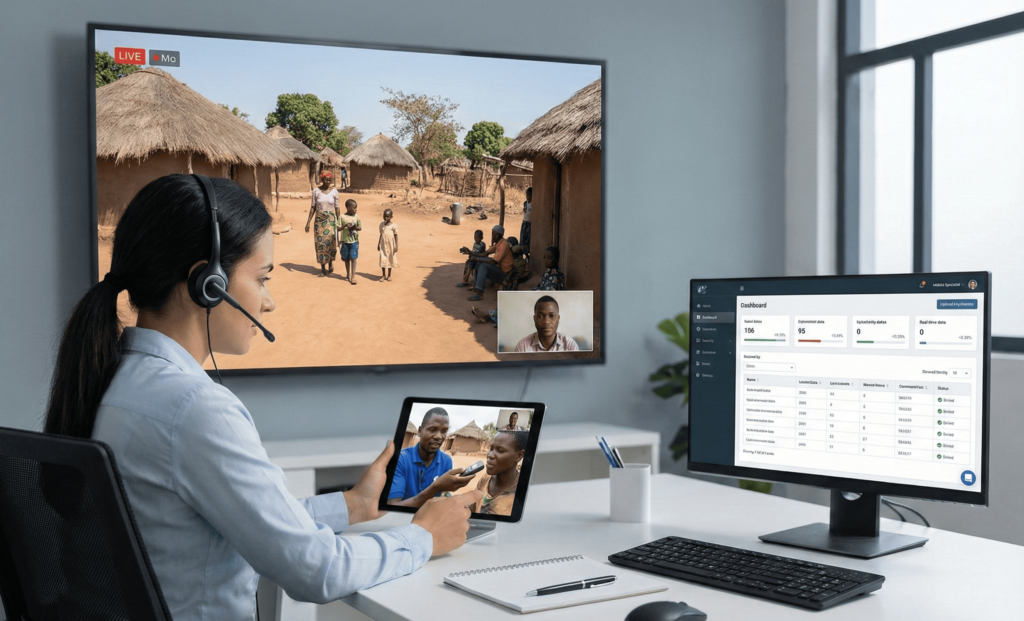
Effective remote monitoring requires strategic adaptation of traditional monitoring approaches, not simply replicating field methods through different channels. This adaptation involves rethinking data collection design, quality assurance processes, stakeholder engagement, and what types of questions can be reliably answered remotely.
Redesigning Sampling Strategies
Traditional sampling often prioritizes geographic dispersion and reaching last-mile communities. Remote monitoring may require adjusting sampling to emphasize:
- Communication access: Prioritizing locations where reliable phone or internet connectivity enables remote contact
- Local intermediaries: Selecting sites where trusted local partners or enumerators can conduct face-to-face data collection safely
- Mixed approaches: Combining remote methods for inaccessible areas with field visits to accessible locations
- Purposive selection: When random sampling is impossible, carefully select representative sites that can be reached remotely
Critical practice: Always acknowledge sampling limitations transparently in reporting. Remote monitoring often sacrifices some representativeness for feasibility. Stakeholders need to understand these trade-offs when interpreting findings.
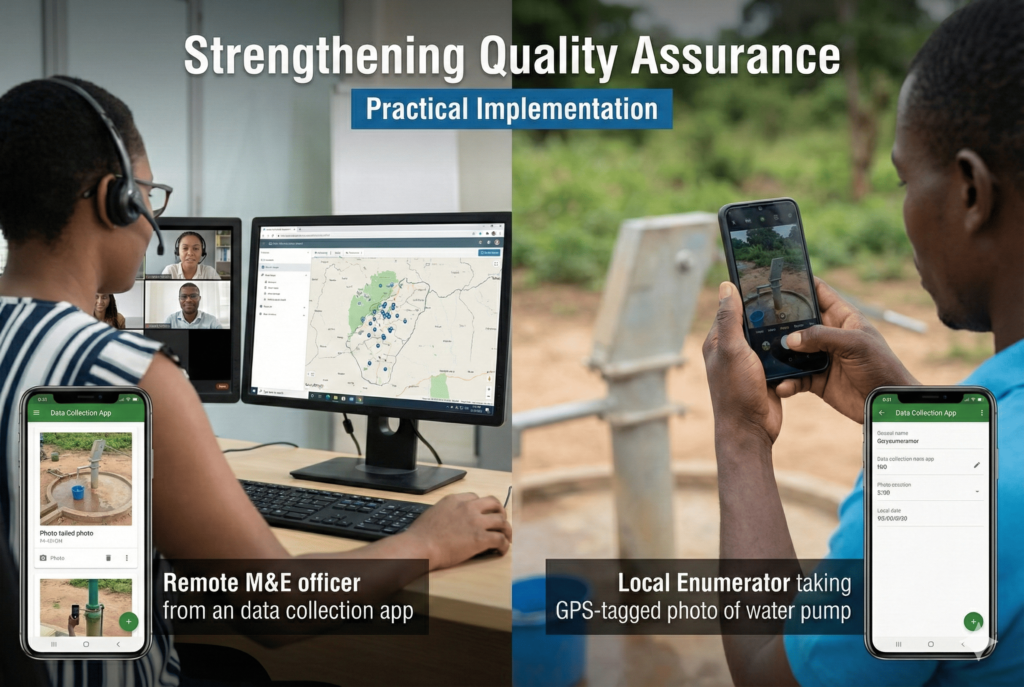
Strengthening Quality Assurance
Remote monitoring presents heightened quality assurance challenges. Without physical presence, verifying data accuracy and detecting fabrication becomes more difficult. Compensation strategies include:
- Real-time data review: Daily examination of incoming data for inconsistencies, impossible values, or suspicious patterns
- Random verification callbacks: Contacting 10-15% of respondents to verify interviews occurred and responses were recorded accurately
- Audio recordings: Where consent permits and culturally appropriate, recording interviews for quality review
- GPS verification: Using smartphone GPS coordinates to confirm data collectors were at reported locations
- Photograph documentation: Requesting photos of infrastructure, activities, or consent forms to verify field presence
- Triangulation emphasis: Collecting data from multiple sources using different methods to cross-validate findings
Adjusting Evaluation Questions
Some evaluation questions are more amenable to remote monitoring than others. Adapt evaluation focus to emphasize:
- Questions remote methods can answer well: Process questions about implementation, perception questions about satisfaction, and factual questions about activities completed
- Questions requiring field observation: Infrastructure quality assessments, behavioural observations, community dynamics; these may require local enumerators or accepting data gaps
Be realistic about what remote monitoring can and cannot assess. Don’t claim to evaluate aspects that require physical presence when using only remote methods.
Selecting Right-Fit Remote Monitoring Methods: A Decision Framework
Multiple remote monitoring approaches exist, each with distinct strengths, limitations, and appropriate applications. Selecting right-fit methods requires matching the approach to the evaluation purpose, stakeholder characteristics, technology access, and security considerations.
Remote Interview Methods
Telephone interviews:
- Strengths: Wide reach in areas with phone access, lower cost than field visits, can reach diverse respondents efficiently
- Limitations: Requires phone ownership/access, no visual observation possible, shorter attention spans, and difficult to build rapport
- Best for: Key informant interviews, structured surveys with closed-ended questions, follow-up interviews with established contacts
Video conferencing (Zoom, Microsoft Teams, Google Meet):
- Strengths: Enables visual connection, strengthening rapport, allows sharing documents or visuals, supports group discussions
- Limitations: Requires reliable internet access, technology literacy, and privacy for conversations
- Best for: In-depth interviews with organizational stakeholders, focus group discussions with groups having technology access, and validation workshops
Messaging platforms (WhatsApp, Signal, Telegram):
- Strengths: Asynchronous communication accommodating schedules, allows photo/video sharing, and text record of responses
- Limitations: Less spontaneous than real-time conversation, may take longer to gather information, limited for complex discussions
- Best for: Collecting brief updates from field staff, sharing photos of activities or infrastructure, maintaining ongoing communication with partners
Third-Party Monitoring Approaches
When direct remote contact is insufficient, third-party monitoring (TPM) contracts local organizations or individuals to conduct monitoring activities. Research from insecure contexts demonstrates that TPM works best when used selectively as a complement to, not a replacement for, internal monitoring systems (World Bank Independent Evaluation Group, 2018).
TPM advantages
- Local knowledge and language skills enabling nuanced data collection
- Physical access to areas where international or national staff cannot go
- Independence from implementing organizations, reducing bias
- Cost-effective for ongoing monitoring across multiple sites
TPM challenges
- Significant time required for recruitment, training, and quality oversight
- Risk transfer to TPM staff who may face security threats
- Potential conflicts of interest if TPM providers have other relationships with implementing partners
- Reduced institutional learning when organizations rely exclusively on external monitoring
Digital Data Collection Methods
Online surveys
- Platforms: SurveyCTO, KoboToolbox, Google Forms, SurveyMonkey
- Best for: Stakeholders with reliable internet access, collecting structured quantitative data, and rapid feedback from large samples
- Consider: Response rates typically lower than interviewer-administered surveys may introduce selection bias toward tech-literate respondents
Mobile data collection by local enumerators:
- Train local staff or contractors to conduct face-to-face interviews using smartphones/tablets with offline data collection apps
- Data syncs to the central server when connectivity is available
- Combines field presence benefits with remote supervision and real-time quality control
Document and Secondary Data Analysis
Remote monitoring can maximize the use of existing data sources:
- Program monitoring data, reports, and documentation
- Government statistics and administrative data
- Partner organization records and reports
- Media reports and social media analysis
- Previous evaluation and research findings
While secondary data cannot replace primary data collection entirely, a thorough document review can address many evaluation questions and contextualize findings from other remote methods.
Essential Software and Equipment for Remote Monitoring
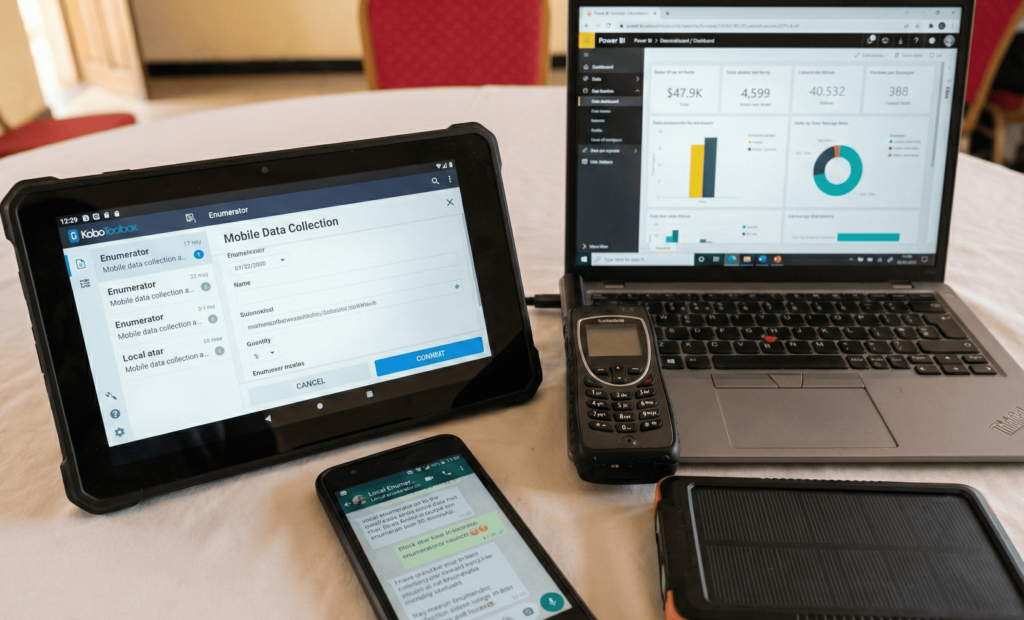
Technology infrastructure determines remote monitoring feasibility and quality. Investing in appropriate tools and ensuring staff capability to use them effectively separates successful remote monitoring from frustrating technical failures.
Core Communication Tools
- Video conferencing: Zoom (most feature-rich), Microsoft Teams (good integration with Office), Google Meet (free and accessible), WhatsApp video calls (when formal platforms are inaccessible)
- Phone systems: Skype or WhatsApp calling for international calls, local mobile phones for in-country communication, consider Computer Assisted Telephone Interviewing (CATI) software for large-scale surveys
- Messaging platforms: WhatsApp (most widely used globally), Signal (encrypted for sensitive contexts), Telegram (good for group coordination)
Data Collection and Management Systems
- Mobile data collection: KoboToolbox (free, humanitarian sector standard), SurveyCTO (robust quality control features), ODK (open-source, highly customizable), CommCare (good for ongoing monitoring)
- Online surveys: Google Forms (free, simple), SurveyMonkey (professional features), Qualtrics (advanced analysis capabilities)
- Data visualization: Tableau Public (powerful free version), Power BI (Microsoft integration), Google Data Studio (easy dashboards)
- Qualitative analysis: NVivo (comprehensive but expensive), Dedoose (cloud-based collaboration), Atlas.ti (strong coding features)
Documentation and File Sharing
- Cloud storage: Dropbox, Google Drive, OneDrive for secure document sharing and collaboration
- Project management: Trello or Asana for task tracking, Slack for team communication, Microsoft Teams for integrated workflow
- Recording tools: Otter.ai for transcription, Zoom’s built-in recording, Rev for professional transcription services
Essential Hardware
- For remote coordinators: Reliable computer with webcam, good headset with microphone, stable internet connection, backup power solutions
- For field enumerators: Smartphones or tablets with data collection apps, portable chargers/power banks, protective cases for devices, local SIM cards with data plans
- Backup systems: Secondary devices in case primary equipment fails, offline data backup on external drives, alternative communication channels
Security and Confidentiality Tools
- Encryption: End-to-end encrypted messaging (Signal), encrypted file sharing (Tresorit), VPN services for secure connections
- Data security: Password managers (LastPass, 1Password), two-factor authentication for all accounts, secure cloud storage with access controls
- Digital consent: DocuSign or similar for obtaining informed consent remotely, audio/video recording of verbal consent when appropriate
Critical reminder: Technology is a tool, not a solution. The most sophisticated software cannot compensate for poor monitoring design or inadequate quality assurance. Invest in staff training on tools before deploying them for remote monitoring.
Practical Implementation: Making Remote Monitoring Work
Successful remote monitoring requires attention to implementation details that often get overlooked in the rush to adapt to constraints.
Before Remote Data Collection
- Test technology thoroughly: Pilot video calls, survey platforms, and data collection tools before actual monitoring begins
- Prepare stakeholders: Send advance communication explaining the remote approach, what to expect, and how to prepare
- Adapt tools for remote use: Shorten interview guides for phone conversations, simplify survey questions, and prepare visual aids for video calls
- Establish backup plans: Alternative communication methods if the primary approach fails, flexible scheduling to accommodate connectivity issues
During Remote Data Collection
- Build rapport intentionally: Remote interactions feel more transactional, invest extra time in greetings, explanations, and demonstrating respect
- Monitor data quality in real-time: Review incoming data daily, flag issues immediately, and provide feedback to enumerators promptly
- Document challenges: Keep a log of technical failures, accessibility problems, and sampling adjustments essential for reporting limitations
- Maintain communication: Regular check-ins with data collectors, quick responses to questions, visible presence even when not physically present
After Remote Data Collection
- Validate findings: When possible, verify key findings through alternative sources or remote validation workshops
- Acknowledge limitations transparently: Report clearly what remote monitoring could and could not assess, sampling compromises, confidence levels
- Document lessons learned: What worked well? What would you adjust? Build organizational remote monitoring capacity through reflection
Strengthening Your Remote Monitoring Approach
Reflect on these questions to assess and improve your remote monitoring capabilities:
- Under what circumstances has your organization used remote monitoring? Were these decisions reactive (forced by circumstances) or proactive (planned capability)?
- What remote monitoring methods has your organization tried? Which worked well and which encountered challenges?
- How does your organization ensure quality when staff cannot physically observe data collection? What additional quality assurance measures are needed?
- What technology infrastructure and staff capabilities would strengthen your remote monitoring capacity? What investments would have highest return?
- How transparently does your organization report limitations of remotely collected data? How could reporting better acknowledge what remote methods can and cannot assess?
From Emergency Workaround to Essential Capability
Returning to that evaluation team facing security constraints, their adaptation to remote monitoring initially felt like a compromise. Field visits offer richness that remote contact cannot replicate observing body language and physical context, spontaneous conversations revealing unexpected insights, relationships built through shared presence.
Yet their remote monitoring approach generated credible findings within timeline and budget constraints while protecting staff safety. Telephone interviews with beneficiaries revealed implementation challenges. Video conferences with partners provided strategic insights. Local enumerators using mobile data collection accessed communities’ international staff could not reach. Document analysis contextualized primary data. Triangulation across methods strengthened confidence despite limitations.
More importantly, the process built organizational capability. The team developed protocols for technology testing, quality assurance frameworks for remote data, relationships with local monitoring partners, and staff skills in remote facilitation. Remote monitoring evolved from emergency backup to an intentional complement to field-based approaches.
The development sector increasingly operates in contexts where traditional field missions face time, accessibility, or security constraints. Around 20% of the world’s poor live in fragile and conflict-affected situations, a proportion expected to double by 2030 (World Bank IEG, 2018). Climate change creates new accessibility challenges. Health emergencies impose movement restrictions. Budget pressures demand efficiency. Remote monitoring is not an optional luxury but an essential capability.
Effective remote monitoring does not mean abandoning quality standards or accepting inferior evidence. It means designing monitoring approaches matched to constraints, leveraging appropriate technologies, investing in quality assurance, and reporting findings with intellectual honesty about what remote methods can and cannot assess.
The organizations that master remote monitoring building it as a core capability rather than treating it as an emergency workaround, position themselves to maintain evidence-based programming regardless of circumstances. They can continue monitoring when others cannot. They gather essential data within compressed timelines. They work effectively in fragile contexts where field presence is impossible. And critically, they maintain commitment to quality evidence even when conditions are far from ideal.
Key Takeaways: Remote Monitoring Essentials
- Remote monitoring becomes necessary due to time constraints, accessibility challenges, or security risks: recognize triggers proactively rather than scrambling reactively
- Adapt monitoring strategies systematically redesign sampling, strengthen quality assurance: adjust evaluation questions to emphasize what remote methods can answer well
- Select remote methods strategically based on stakeholder access, evaluation purpose, and security context: telephone, video, messaging, TPM, and digital collection each have distinct applications
- Invest in appropriate technology infrastructure: communication tools, data collection platforms, security systems and ensure staff capability to use them effectively
- Strengthen quality assurance for remote monitoring: real-time data review, verification callbacks, GPS confirmation, photo documentation, triangulation across sources
- Third-party monitoring fills critical access gaps but requires significant investment in selection, training, and oversight: use selectively as a complement, not a replacement.
- Report limitations transparently: acknowledge what remote monitoring could not assess, sampling compromises, confidence levels in findings
References
Better Evaluation. (2024). Monitoring and evaluation in fragile, conflict-affected and violent settings. Retrieved from https://www.betterevaluation.org
Sagmeister, E., & Steets, J. (2018). The use of third-party monitoring in insecure contexts: Lessons from Afghanistan, Somalia and Syria. Secure Access in Volatile Environments (SAVE) Research Programme.
World Bank Independent Evaluation Group. (2018). Third-party monitoring in volatile environments: Do the benefits outweigh the risks? Retrieved from https://ieg.worldbankgroup.org