How to Become a Program Evaluator in 2025
May 26, 2025 2025-12-12 6:42How to Become a Program Evaluator in 2025
What program evaluators actually do
Think of program evaluators as detective-analysts. They figure out whether organizational programs are working or just burning money.
Your day might start with a meeting where program managers explain their goals. Then you’re designing surveys, running focus groups, or diving into spreadsheets full of participant data. By afternoon, you could be presenting findings to executives who need to decide whether to expand, modify, or kill a program entirely.
The work changes based on where you land. Healthcare evaluators might assess patient care programs or track public health interventions. In education, you’re measuring if that new curriculum actually helps kids learn better. Nonprofit evaluators focus on program impact—does this job training program really get people employed? Corporate evaluators look at training effectiveness and organizational change efforts.
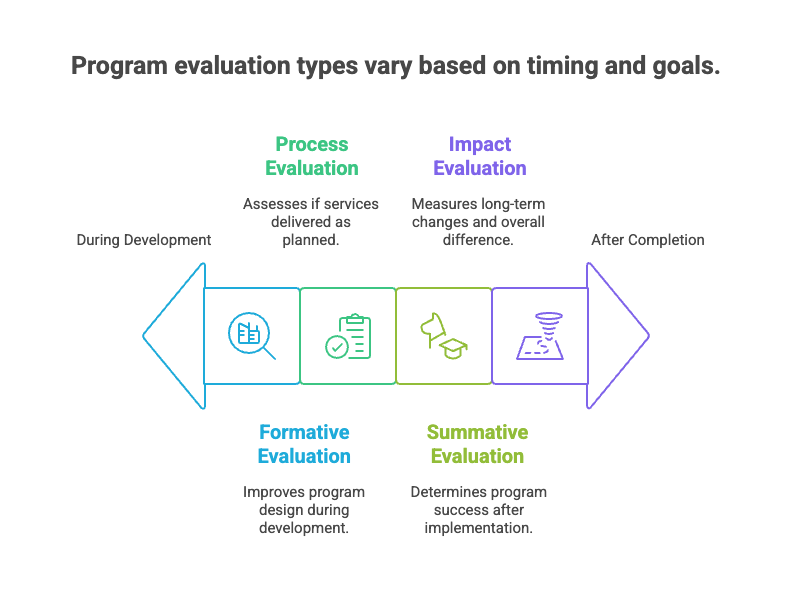
There are different flavors of evaluation work:
- Formative evaluation happens while programs are being developed. You’re helping improve the design.
- Summative evaluation comes after implementation. Did it work or not?
- Process evaluation focuses on how well the program ran. Were services delivered as planned?
- Impact evaluation measures long-term changes. What difference did this actually make?
Most evaluators pick a sector and stick with it. But the core skills transfer everywhere—you’re always using data to answer “Is this program making the difference we hoped for?”
Education requirements and pathways
Here’s the thing about education requirements. They’re more flexible than most career guides suggest.
Most evaluators have bachelor’s degrees, but the major varies wildly. I’ve met successful evaluators with backgrounds in psychology, business, education, even English literature. What matters more is developing analytical thinking and research skills.
Pick your undergrad based on where you want to work. Healthcare management for medical settings. Business for corporate roles. Education for school-based positions. Social sciences work almost anywhere.
Graduate school boosts your prospects significantly. Many employers prefer master’s degrees, especially for senior roles. But not all grad programs are created equal.
The best options include research methodology programs, public policy degrees, and educational measurement programs. Kent State’s Master of Education in research and statistics gets mentioned a lot in evaluation circles. Similar programs exist at most major universities.
Certificate programs offer a middle ground. The American Evaluation Association runs specialized training that’s respected in the field. Universities like Wilfrid Laurier offer Program Evaluation Certificates covering evaluation design, data collection, and analysis.
These certificates cost less than full degrees and can be completed while working. They’re particularly good for career changers who have relevant experience but need evaluation-specific training.
If money’s tight, start with online courses and AEA resources. You won’t get the same credibility as formal programs, but it’s a way to test the waters and build foundational knowledge.
Consultant’s Perspective: Education Beyond Employment
For independent consultants, what matters more than formal degrees:
- Proven track record: Case studies demonstrating results
- Specialized expertise: Deep knowledge in a niche (worth more than generalist PhD)
- Professional certifications: CES credential, evaluation-specific training
- Publications & thought leadership: Articles, conference presentations
Reality check: A consultant with 5 years experience, niche specialization, and strong portfolio will out-earn a PhD generalist working in employment. Focus on expertise that clients pay for, not credentials that look good on paper.
Your step by step career roadmap
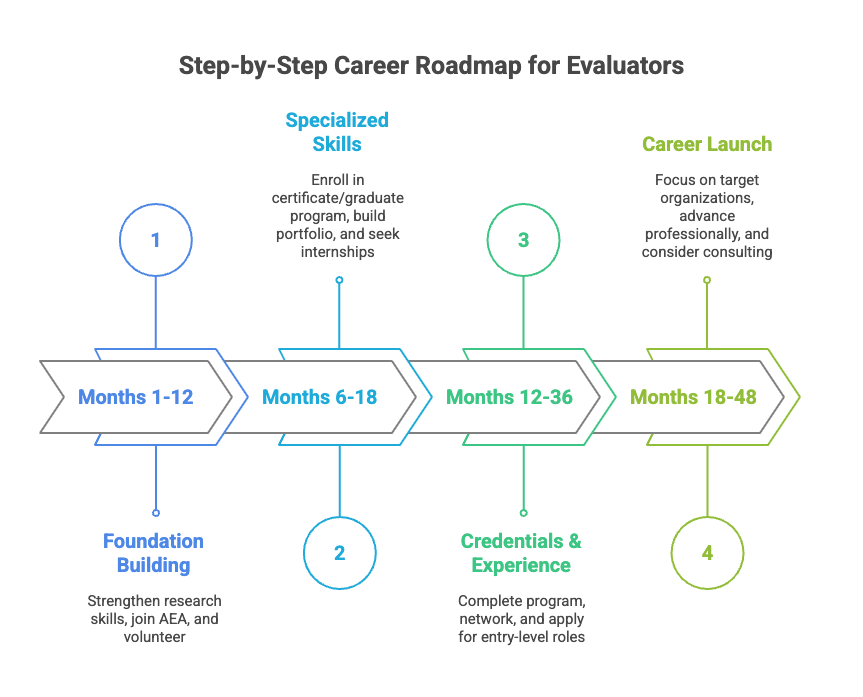
Months 1-12: Build your foundation
Start strengthening research and analytical skills through online courses or community college classes. Focus on statistics, research methods, and software like Excel or SPSS. Nothing fancy yet, just basics.
Join the American Evaluation Association as a student member—it’s 50 bucks annually. Attend local chapter meetings and webinars. You’ll start understanding what evaluators actually talk about and worry about.
Look for volunteer opportunities. Nonprofits often need help measuring outcomes but can’t afford dedicated evaluation staff. Even small projects give you something to put on your resume.
Months 6-18: Develop specialized skills
Enroll in a certificate program or start graduate coursework. These programs cover evaluation design, data collection, statistical analysis, and report writing. The structured learning matters here.
Start building a portfolio, even with volunteer work. Document your process and results. Future employers want to see you can actually do evaluation work, not just talk about it.
Apply for internships or entry-level research positions. Even if they’re not evaluation roles, experience with data analysis, survey design, or program management transfers directly.
Months 12-36: Gain credentials and experience
Complete your certificate or graduate program. Pursue additional credentials through AEA or specialized training in your sector.
Network more intentionally now. AEA conferences, evaluation special interest groups, LinkedIn connections with practitioners. The evaluation community is smaller than you think.
Start applying for entry-level positions. Look for “Research Analyst,” “Program Analyst,” or “Evaluation Specialist” titles. Many organizations promote internally for evaluation roles, so consider positions that could lead there.
Months 18-48: Launch your career
Focus your search on organizations matching your background. Healthcare systems, school districts, nonprofits, and consulting firms all hire regularly.
Keep developing professionally through advanced training, conference presentations, and certifications. Consider specializing in specific methods or program types.
Many evaluators eventually transition to consulting. It requires business development skills but offers higher earning potential and flexibility. Most start this transition after gaining solid organizational experience.
Alternative Path: The Independent M&E Consultant Route
If you have 3-5+ years of M&E experience, you may be ready to bypass traditional employment and launch an independent consulting practice. Here’s what that journey looks like:
Phase 1: Foundation Building (Months 1-2)
- Niche Selection: Choose your specialization (climate M&E, health systems, education impact, humanitarian response, gender evaluation, etc.)
- Service Design: Package your expertise into 5-8 specific consulting offerings
- Pricing Strategy: Calculate your day rate (typically $400-$1,500 depending on experience and niche)
- Legal Structure: Register business, get insurance, set up contracts
- Brand Development: LinkedIn profile, consultant CV, portfolio/website
Phase 2: Client Acquisition (Months 2-4)
- Network Activation: Reach out to 50-100 contacts from your existing network
- Platform Registration: Join Devex, ReliefWeb, consulting rosters (UNDP, World Bank)
- Partnership Development: Connect with larger firms for subcontracting opportunities
- Content Marketing: Publish thought leadership on LinkedIn, sector blogs
- Proposal Submission: Target 10-15 RFPs that align with your niche
Phase 3: First Engagements (Months 3-6)
- Win First Contract: Most consultants land first paid work within 90-120 days
- Deliver Excellence: Focus on client satisfaction → referrals
- Case Study Development: Document results for portfolio
- Systems Refinement: Improve proposal templates, delivery processes
- Pipeline Management: Always be prospecting for next project
Consulting Income Trajectory
Realistic earnings for independent M&E consultants:
- Year 1: $40K-$80K (building client base, part-time income)
- Year 2: $80K-$120K (consistent pipeline established)
- Year 3+: $120K-$200K (specialized reputation, premium rates)
- Senior Specialists: $200K-$300K+ (niche expertise, multiple project, international work)
Real Example: An M&E officer earning $65K annually transitioned to consulting with a focus on climate adaptation evaluation. Within 18 months, she was earning $140K annually, working with 1 bilateral donors and 2 international NGOs, while maintaining a 4-day work week.
Skills you need to master
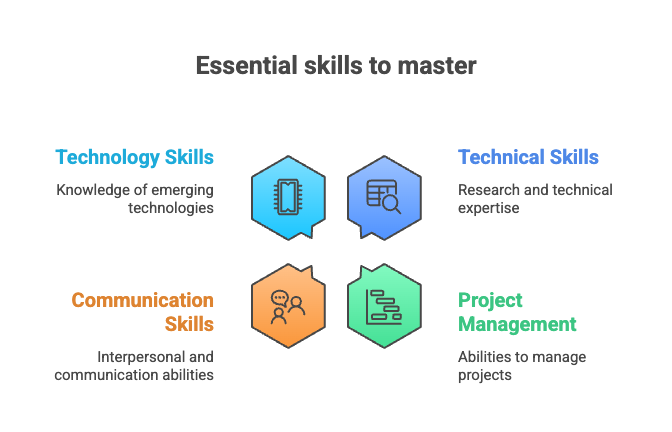
Technical and research competencies
You need solid grounding in both quantitative and qualitative methods. Survey design, interview techniques, focus group facilitation, statistical analysis. Most evaluators use software like SPSS, R, or SAS for number crunching.
Understanding experimental design is critical. When can you do randomized controlled trials? When do observational studies make more sense? Mixed-methods evaluation combining surveys with interviews is increasingly common.
Data visualization helps communicate findings effectively. Tools like Tableau, PowerBI, or even Excel can create charts that tell your data story clearly. Stakeholders remember good visuals.
To develop strong technical skills in evaluation frameworks, check out our comprehensive Step-by-Step Guide to Developing an M&E Framework. These frameworks are not only essential for employed evaluators but also represent a high-value consulting service ($8K-$25K per engagement).
Project management abilities
Evaluation projects have tight deadlines, multiple stakeholders, and complex logistics. You’ll manage budgets, coordinate data collection across sites, supervise research assistants, and meet quality standards.
Risk assessment and contingency planning are essential. Data collection faces unexpected challenges—low response rates, stakeholder conflicts, technical problems. Good evaluators anticipate issues and have backup plans ready.
Communication and interpersonal skills
Writing clear reports is probably your most important skill. You translate complex statistical findings into recommendations that non-technical stakeholders can understand and act on.
Presentation skills matter too. You’ll brief executive teams, present at conferences, facilitate stakeholder meetings. Explaining evaluation concepts clearly to diverse audiences determines your effectiveness.
Stakeholder management requires diplomacy and emotional intelligence. Program staff sometimes feel threatened by evaluation, worried negative findings will affect their jobs. Building trust while maintaining objectivity is a delicate balance.
Emerging technology skills
AI tools are getting integrated into evaluation practice. Familiarity with AI-assisted analysis and automated reporting can set you apart from other candidates.
Remote data collection became standard during COVID and stayed important. Skills in online survey platforms, virtual focus groups, and digital stakeholder engagement are now expected competencies.
From Technical Skills to Consulting Revenue
You now understand the technical M&E skills evaluators need. But if you’re considering consulting, you also need business skills that are rarely taught:
| Technical Skill You Have | Business Skill You Need |
|---|---|
| Designing evaluation frameworks | Pricing framework development as a service ($8K-$25K per engagement) |
| Conducting baseline studies | Writing proposals that win baseline contracts (30%+ success rate) |
| Data analysis and reporting | Structuring deliverables to demonstrate value and justify premium rates |
| Stakeholder management | Building long-term client relationships that generate referrals |
The gap between employed evaluator and successful consultant isn’t more M&E training. It’s learning to package, price, market, and deliver your expertise as a business. Learn how →
Salary expectations and job market
Program evaluators earn an average of $64,712 annually. Entry-level positions start around $47,500, with experienced professionals reaching $87,500. The salary range is wide, reflecting significant advancement opportunities.
Location impacts pay substantially. Major metro areas offer higher salaries to offset living costs. New York area evaluators earn around $70,798 annually, about $6,000 above national average.
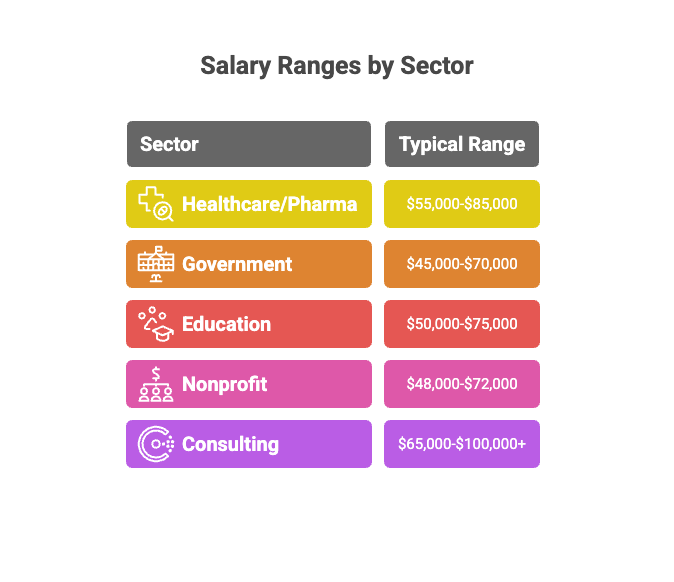
Industry specialization affects pay too:
Job market outlook is exceptionally strong. Program evaluation shows 11% expected growth over the next decade—way above average for most occupations.
Several trends drive this demand. Government requirements for evidence-based policy making. Nonprofit accountability requirements from funders. Corporate focus on measuring ROI. Healthcare emphasis on outcome-based care.
Remote work opportunities expanded significantly and created national possibilities while potentially increasing competition. Virtual evaluation skills became increasingly valuable.
Consulting offers highest earning potential but requires business development skills and client management. Many evaluators start in organizational roles and transition after building expertise and networks.
Career progression typically follows: Entry analyst ($45,000-$55,000) → Senior evaluator ($60,000-$75,000) → Evaluation manager ($75,000-$90,000) → Director or consultant ($85,000+).
| Sector | Typical Range | Notes |
|---|---|---|
| Healthcare/Pharma | $55,000-$85,000 | Higher due to complexity |
| Government | $45,000-$70,000 | Lower base, good benefits |
| Education | $50,000-$75,000 | Varies by institution |
| Nonprofit | $48,000-$72,000 | Mission work, flexibility |
| Consulting | $65,000-$100,000+ | Project-based, higher potential |